

Trusted Mesa living trust attorneys with more than 20 years of Arizona estate planning experience.
If you're weighing whether to set up a living trust in Mesa, you probably have more questions than answers. People hear that a living trust can avoid probate, protect privacy, and simplify things for the family. That's largely accurate. But the document only works if it fits the assets, the family, and the goals behind it. Our Mesa, AZ living trust lawyer at LifePlan Legal AZ designs and drafts trusts that actually do the job. Our founder has spent more than 20 years on Arizona estate work. Call us today to schedule your consultation.
Living Trust Lawyer Mesa, AZ
A living trust is a written agreement you create during your lifetime that holds assets for your benefit while you're alive and passes them to chosen beneficiaries after you die. The trust names you as the initial trustee, which means you keep control of everything, and it names a successor trustee who takes over if you become incapacitated or pass away.
Most living trusts are revocable, which means you can amend or revoke them anytime before your death. Some are irrevocable, trading that flexibility for benefits like creditor protection, long-term care planning, or removing assets from your taxable estate. The right structure depends on what you own, who you want to provide for, and what you're trying to protect against.
Types of Living Trust Cases We Handle in Mesa
Living trusts come in several flavors, and the right one depends on the family's goals, the assets involved, and the level of control or protection a client wants. These are the trust-related matters our Mesa living trust attorneys handle:
- Revocable living trusts. The most common type, and the one most people mean when they say "living trust." You can change beneficiaries, swap trustees, move assets in and out, or revoke the trust entirely while you're alive and of sound mind. We design these as the centerpiece of most estate plans.
- Joint revocable trusts for married couples. Spouses often share a single trust that holds community and separate property and treats the surviving spouse's share differently from the deceased spouse's. We draft these to match Arizona community property rules and the couple's intentions for the survivor and children.
- Irrevocable living trusts. Once created, these trusts can't be undone. The trade-off can be worth it for asset protection, long-term care planning, or removing assets from a taxable estate. We discuss whether the constraints fit your situation before drafting.
- Pour-over wills. A short backup will pair with a living trust. Anything not formally titled in the trust at death gets directed there through the will, providing a safety net for assets missed during funding. Our Mesa living trust attorneys prepare these alongside every trust.
- Dynasty trusts. Multi-generational trusts that hold wealth for children, grandchildren, and beyond. Useful for protecting an inheritance from divorce, creditors, and transfer taxes across decades.
- Asset protection. Irrevocable structures are designed to shield assets from future creditors or lawsuits. Common for business owners, physicians, and others with elevated liability exposure.
- Deeds and real estate transfers. A trust only works if assets are actually retitled into it. We prepare deeds, update titles, and coordinate with banks and brokerage firms so the funding gets done. That step is where most do-it-yourself trusts fail.
- Trust amendments and restatements. Life changes. Marriages, divorces, deaths, new children, asset moves, and changing tax rules all push the document out of date. We update existing trusts so they keep reflecting what the grantor actually wants, and we handle full restatements when amendments would add up to a confusing patchwork.
- Estate administration. When the grantor passes, the successor trustee steps in to manage assets, communicate with beneficiaries, and handle the technical filings. We advise trustees so they don't accidentally breach their duties.
Why Choose LifePlan Legal AZ for Living Trusts in Mesa, AZ?
Estate Planning Built Around Working Trusts
Jake Carlson, the firm's founder, brings more than two decades of Arizona estate practice to every matter we handle. He earned a law degree with a concentration in tax and estate planning and an MBA in financing emerging enterprises. He also holds the Certified Exit Planning Advisor credential, which informs how he counsels business owners on integrating trusts with succession planning. Rebecca Easton has spent more than a decade on estate and business planning matters in Arizona and Colorado. She belongs to the Probate and Trust Section of the State Bar of Arizona, its Elder Law Section, and the East Valley Estate Planning Council. Both attorneys draft and oversee living trust work. If you're looking at trusts more generally before settling on a structure, our estate planning lawyer in Mesa covers the wider scope.
A Track Record of Living Trusts That Function
We've drafted living trusts for many Arizona families across a wide range of situations. Some are young couples buying their first home. Others are multi-property owners with blended families, or business owners thinking about succession. The common element is a trust that's funded, reviewed periodically, and actually does what it was designed to do.
Mesa Living Trust Infographic
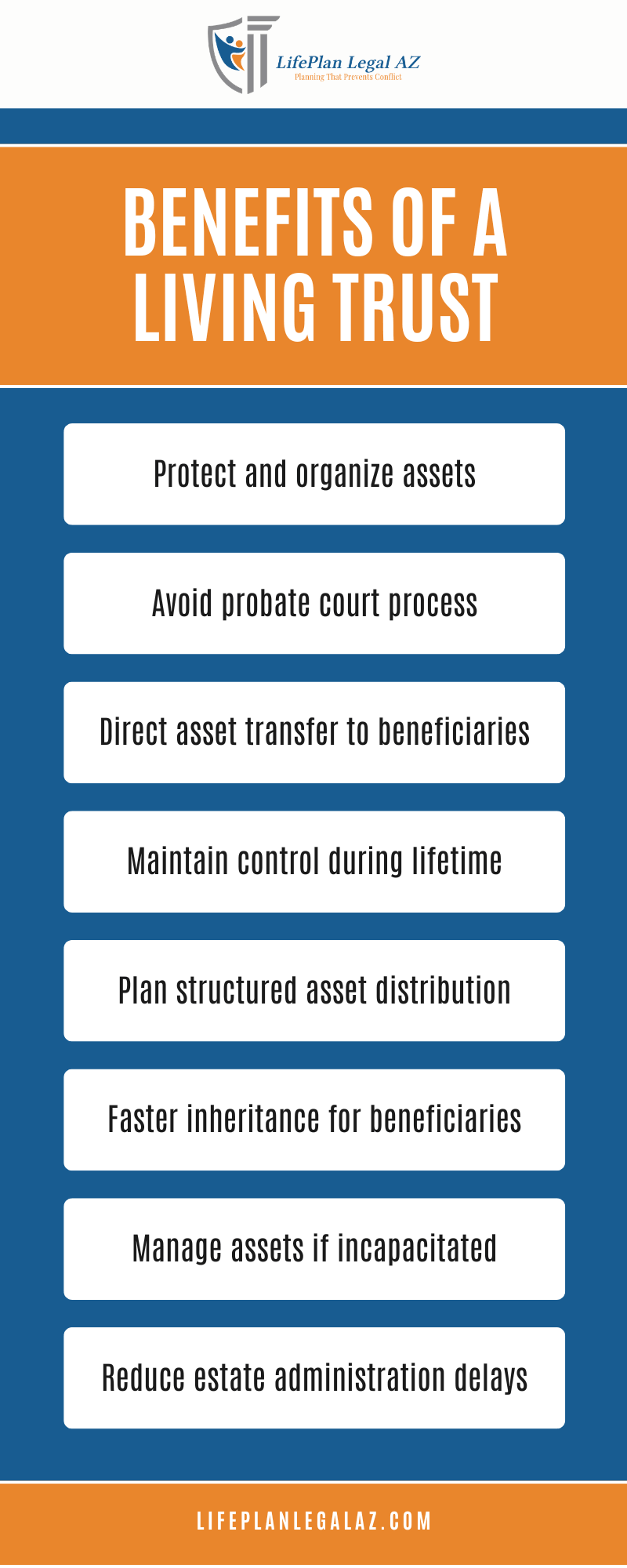
Understanding Living Trust Cases
Key Documents and Concepts in Living Trust Planning
A handful of recurring terms come up in every living trust conversation. Understanding what they mean makes the planning process clearer.
- Grantor (or settlor). The person who creates the trust and transfers assets into it. With a revocable living trust, the grantor is usually also the initial trustee.
- Trustee. The person or institution responsible for managing trust assets according to the trust document.
- Successor trustee. The person who takes over as trustee when the original trustee dies, resigns, or becomes incapacitated.
- Beneficiary. Anyone entitled to receive trust assets or income, either currently or after the grantor's death.
- Trust funding. The process of retitling assets into the name of the trust. An unfunded trust does almost nothing.
- Schedule of assets. A list attached to the trust identifying the property that belongs to it.
- Certification of trust. A short summary document that confirms the trust exists and identifies the trustee's authority without exposing every term.
These pieces work together. A trust without funding is just paper, while funding without an updated beneficiary plan can create unintended tax consequences. Trust funding is the most overlooked piece, and our drafting addresses it from the start.
What Are Important Aspects of a Living Trust Case?
A living trust is only useful if it accounts for the realities of the grantor's life. A few areas come up almost every time our Mesa living trust lawyer works on a case:
- The full asset picture, including real estate in Arizona and any other state, financial accounts, retirement plans, and business interests.
- Beneficiary designations on retirement accounts and life insurance, which override the trust if they aren't coordinated.
- Tax considerations for high-value estates and for assets with appreciated cost basis.
- Family circumstances that affect distribution, including blended families, beneficiaries with addiction or disability, and minor children.
- Long-term care planning concerns for older clients.
A trust drafted without considering these issues looks fine on paper, but falls apart when it's actually needed. We work through them during the initial sessions so the document fits the real situation.
What Is the Living Trust Case Timeline?
A standard living trust engagement runs about three to six weeks from start to finish. The exact pace depends on how quickly clients gather information and make decisions, but a typical timeline you can expect when working with our Mesa living trust lawyer is:
- Initial consultation: discuss goals, assets, family circumstances, and the right structure.
- Design and drafting: prepare the trust agreement, pour-over will, powers of attorney, and supporting documents.
- Review meeting: walk through the drafts together and adjust provisions where needed.
- Signing: execute the documents with proper witnesses and notarization.
- Funding: retitle assets into the trust, file new deeds, and coordinate with financial institutions.
After signing, we recommend a review every three to five years or after any major life change.
What Should You Bring to Your Living Trust Consultation?
A first consultation with our Mesa living trust attorney moves faster and more usefully when clients arrive with a few documents in hand:
- A rough list of assets and approximate values, including real estate, accounts, and business interests.
- Recent statements for financial accounts and retirement plans.
- Deeds for any real property and titles for vehicles or other registered items.
- Copies of any existing wills, trusts, or powers of attorney.
- A list of intended beneficiaries with relationships and contact details.
Bringing this information doesn't commit anyone to anything. It just means the meeting can move past basic intake into the actual planning conversation. Most first consultations run about an hour. You'll leave with a sense of what kind of trust fits, what the next steps look like, and what the realistic timeline is. If you're not sure yet whether a living trust fits, the conversation will help you decide.
What Are Important Arizona Legal Resources for Living Trust Cases?
Living trusts are governed by Arizona's trust code along with related provisions for wills and estates. For clients who want to read up on the framework before, during, or after meeting with us, these resources are a sensible starting point:
- The Arizona Revised Statutes Title 14, hosted by the Arizona Legislature, which contains the Arizona Trust Code and related estate provisions.
- The Internal Revenue Service materials on federal estate and gift taxes, which matter for higher-value trusts.
- The Arizona Probate Forms library on the Arizona Judicial Branch site is useful for context on what probate looks like, which is the process most living trusts are designed to avoid.
- The Maricopa County Probate Court handles probate filings in this region when a trust isn't in place or isn't fully funded.
These resources are useful for background, but they can’t replace meeting with our Mesa living trust lawyer!
Reach Out to LifePlan Legal AZ to Schedule a Consultation
If you're ready to talk through whether a living trust fits your goals, we're ready to listen. Our attorneys will review your assets, your family situation, and the outcomes you want, then explain what kind of trust does the job. Contact us to schedule a meeting with our Mesa living trust lawyer. We respond to inquiries promptly.


