

Probate Lawyer Gilbert, AZ
 If you have recently lost a family member and are now responsible for handling their estate, probate can feel like a second full-time job layered on top of grief. Arizona has specific filing deadlines, notice requirements, creditor rules, and court procedures that must be followed precisely. The consequences of getting them wrong range from costly delays to personal liability for the person managing the estate.
Our Gilbert, AZ probate lawyer helps families move through each phase of the process without guesswork. LifePlan Legal AZ has served East Valley families through probate, trust administration, and estate planning for years. We offer free consultations to help you understand your obligations and your options.
Why Choose LifePlan Legal AZ for Probate in Gilbert, AZ?
 Attorneys Who Know Arizona Probate Law
Jake Carlson founded LifePlan Legal AZ and has practiced law in Arizona for more than 20 years. His J.D. comes from California Western School of Law, where he concentrated in tax and estate planning. He also earned an MBA from San Diego State University in financing emerging enterprises. Jake carries the Certified Exit Planning Advisor designation, a credential that sharpens his ability to handle probate matters involving business assets, succession complications, and corporate transitions. He sits on the State Bar of Arizona Probate & Trust Section.
Rebecca Easton is licensed in Arizona and Colorado. She earned her J.D. from the University of Denver Sturm College of Law and is a member of the East Valley Estate Planning Council. Becky ran her own solo practice for seven years before merging with LifePlan Legal AZ in 2025, and during that time she helped hundreds of families implement estate plans and navigate trust administration. She was the first homeowner elected to the Eastmark Residential Association Board and regularly leads workshops on incapacity planning and asset protection across the East Valley.
Our firm operates as an estate planning lawyer in Gilbert, AZ, which means probate sits within a broader practice that includes wills, trusts, powers of attorney, and business planning. Your case stays under one roof.
A Record Families Can Rely On
Our attorneys have helped clients recover millions of dollars through proper estate administration, trust management, and business succession planning. One matter that stands out involved a client turned away by six other law offices. We took the case. We found a path forward.
Clear, Upfront Pricing
Nobody wants a surprise bill while they're dealing with a loss. We discuss pricing during our initial consultation and structure many of our probate engagements with transparent fee arrangements so you know what to expect before work begins.
⭐⭐⭐⭐⭐
"Want to thank Jake and his team at LifePlan Legal AZ for a very smooth probate process. His knowledge on this matter made it all worth it, even with unexpected events. I highly recommend Jake and his team at LifePlan Legal. Again, thank you Jake for all your work. Well done!" — Art Guzman
Read more reviews on our Google Business Profile.
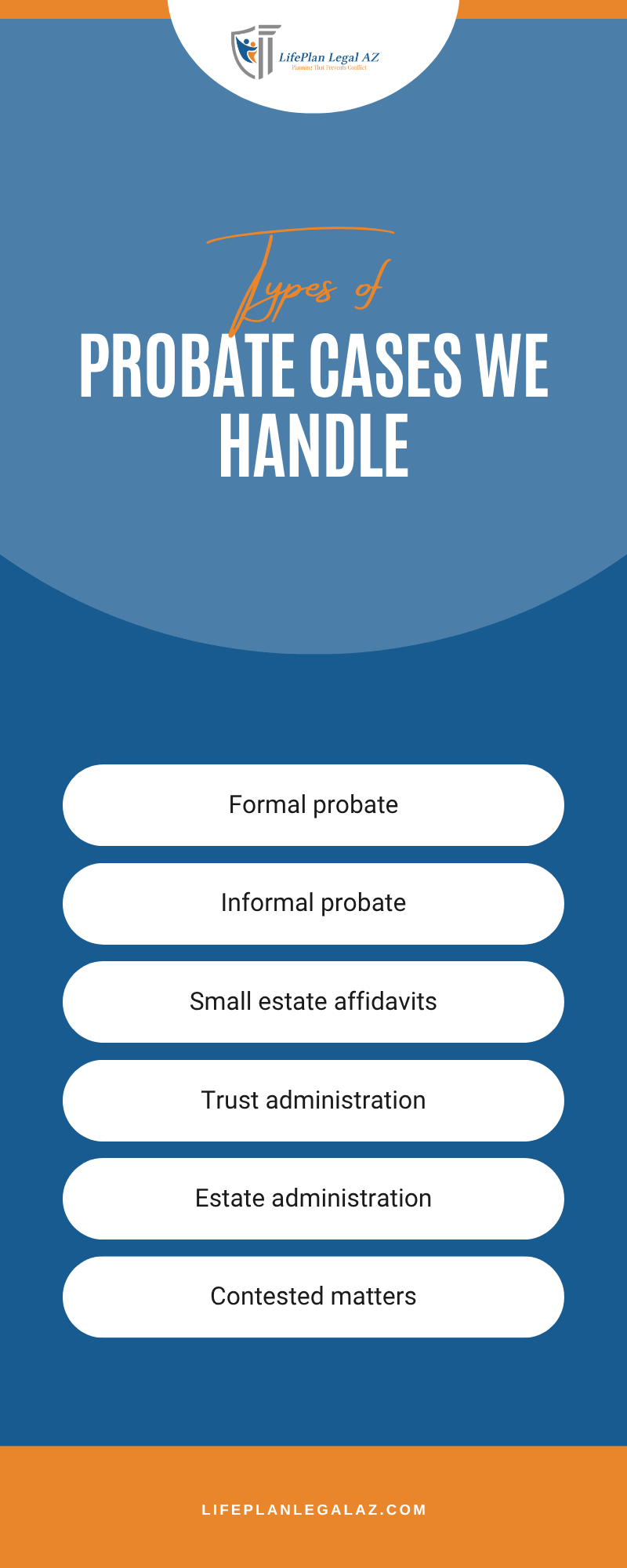
Types of Probate Cases We Handle in Gilbert
 Our firm handles a range of probate and estate administration matters across Gilbert and the surrounding East Valley. Here is what that looks like in practice:
- Formal probate. When a will is contested or the estate involves complicated assets, formal probate requires full court supervision. We represent personal representatives through every hearing and filing in Maricopa County Superior Court, from the initial petition through final distribution.
- Informal probate. Most uncontested estates in Arizona qualify for informal probate, which moves through the court registrar rather than a judge. No hearing is required. We prepare the application, manage creditor notices, handle the inventory, and oversee distributions.
- Small estate affidavits. Arizona allows certain estates to skip probate entirely through a sworn affidavit. Whether your family qualifies depends on the value of the estate after subtracting liens and encumbrances. We assess eligibility and prepare the documents for banks, the MVD, and title companies.
- Trust administration. Assets held in a trust avoid probate court, but the successor trustee still carries legal obligations. Accountings, beneficiary notifications, creditor considerations, tax filings. We guide trustees through every one of those requirements.
- Estate administration. The personal representative's job is extensive under Arizona law: inventorying assets, paying debts in the right order, filing returns, distributing what remains. We manage it all so that the executor's responsibilities don't become a second source of stress.
- Contested matters. Disputes among heirs happen more often than most families expect. Challenges to a will's validity, allegations of undue influence, disagreements about who should serve as personal representative. We handle these disputes and work toward resolution as efficiently as the circumstances allow.
Arizona Legal Requirements for Probate
 Arizona's probate law lives in Title 14 of the Arizona Revised Statutes. The state adopted the Uniform Probate Code, which means the procedures here are more streamlined than in some other states. But streamlined does not mean simple. A few provisions affect nearly every Gilbert probate case.
The filing deadline is two years from the date of death, per A.R.S. § 14-3108. That sounds generous until you consider how quickly two years can pass when a family is grieving, sorting through belongings, and trying to figure out what to do. Miss that window, and your options shrink dramatically.
For families in Gilbert, all probate cases go through the Maricopa County Superior Court, which handles probate proceedings countywide.
Arizona also offers a simplified route for smaller estates. Under A.R.S. § 14-3971, if personal property is valued at $200,000 or less after liens, and real property at $300,000 or less, the family can use a small estate affidavit instead of opening a full probate case. Personal property affidavits can be filed 30 days after death. Real property requires six months. The Legislature raised these thresholds in 2025, which opened the door for many more East Valley families.
After informal probate is granted, the applicant must notify all heirs and devisees within 30 days, as required by A.R.S. § 14-3306. Those parties then have four months to contest. In practice, uncontested cases sail through this period. But the notice must still be sent, and it must be done properly. Cutting corners here can create real problems later.
Important Aspects of a Gilbert Probate Case
 Identifying and Inventorying Assets
The personal representative has to locate everything the decedent owned. Bank accounts. Retirement funds. The house. Vehicles. Personal property with any meaningful value. Families are often surprised by what turns up during this process, and just as often surprised by what doesn't. A forgotten account at a credit union, a small life insurance policy nobody knew about, a time-share in another state. We have a reliable process for locating missing assets when the obvious ones have been accounted for.
Handling Creditor Claims
Arizona law requires the personal representative to notify creditors and give them a chance to submit claims against the estate. Known creditors get direct notice. A newspaper publication handles the rest. The claims period runs four months from first publication. During that window, legitimate debts are reviewed and paid in the priority order the statute requires. Paying out of order, or paying before the window closes, can expose the representative to personal liability. We manage the entire creditor process to prevent that.
Distributing Assets to Beneficiaries
Once debts, taxes, and costs of administration are settled, distributions happen. With a will, the terms control. Without one, Arizona's intestacy statutes decide. And those default rules surprise people. A surviving spouse does not automatically inherit everything. It depends on whether the decedent had children from another relationship and how community property was titled. These distinctions matter, and we make sure they're handled correctly.
Closing the Estate
Filing a closing statement releases the personal representative from ongoing liability. Skip this step and you remain legally responsible for the estate indefinitely. We've watched probate mistakes by other representatives create conflicts years after everyone assumed the estate was done. Closing properly is worth the effort.
Tax Obligations
The personal representative must file the decedent's final income tax return. If the estate generates income during administration from rental property, investments, or business operations, a separate fiduciary return is required too. Arizona does not impose its own estate tax, but federal obligations still apply for larger estates. We work with tax professionals when the situation calls for it.
Dealing With Real Property
If the estate includes a home or other real property in Gilbert, the personal representative needs to determine the right approach: sell, transfer, or hold. Arizona has specific rules about real estate transfers after death, including beneficiary deed procedures, affidavits of succession, and the interaction between probate and existing deeds. We prepare the documents and coordinate with title companies to make sure the property transfers cleanly.
Contact LifePlan Legal AZ
 If you are dealing with probate in Gilbert or anywhere in the East Valley, we are here to help you through the process without unnecessary stress or confusion. Our initial consultations are free, and we will give you a clear picture of what your case involves and what it will cost.
Contact us to schedule a time to talk.
Gilbert Probate Infographic
Probate Statistics in Gilbert
 Probate volume tracks two things: how many people live in an area and how old they are. Gilbert is growing on both counts. The town is home to roughly 275,000 residents, ranks among the fastest-growing communities in Arizona, and counts about one in ten residents as 65 or older, according to the U.S. Census Bureau. As that share climbs, more Gilbert families find themselves responsible for settling an estate, which our Gilbert, AZ probate lawyer can help with.
Statewide, Arizona records tens of thousands of resident deaths every year, per the Arizona Department of Health Services. Each of those deaths can leave behind property that has to be transferred, and many of those transfers move through the Superior Court of Arizona in Maricopa County, which processes thousands of probate matters each year.
Documents You'll Need to Start Probate in Gilbert
 Probate moves faster when the paperwork is ready. Before the first filing, the personal representative pulls together a handful of documents that the court, the banks, and the estate's creditors will all ask for. Gathering them early prevents the stops and starts that stretch a case out for months. Here is what’s helpful to have on hand before you meet with our Gilbert probate lawyer:
- The death certificate. Order several certified copies, not one. The court, every bank, each insurer, and the county recorder tend to want their own original, and waiting on additional copies is one of the most common early delays.
- The original will, if there is one. Arizona generally wants the signed original document, not a photocopy. If all you can find is a copy, say so early, because proving a lost or destroyed will adds steps the court has to approve.
- A list of the assets. Bank and brokerage accounts, real estate, vehicles, business interests, and retirement accounts all belong on it. Note how each one is titled, since the way an asset is owned decides whether it passes through probate or around it.
- Recent statements and titles. Account statements, deeds, and vehicle titles confirm what the estate holds and what it is worth. They also help you spot property that skips probate, like accounts with named beneficiaries or a home held with survivorship rights.
- A list of the debts. Mortgages, credit cards, medical bills, and unpaid taxes all have to be accounted for. Creditors get a limited window to file claims, and the estate has to settle what it owes before anyone receives an inheritance.
- Names and addresses of the heirs and beneficiaries. Arizona requires that interested parties receive notice of the proceeding. Having current contact information ready keeps the case from stalling because one relative could not be reached.
- Any trust documents. If the decedent created a trust, it changes what probate actually covers. Bring the trust so our Gilbert probate attorney can separate the assets the court controls from the ones the trustee handles outside of court.
- Your own identification. As the proposed personal representative, you will sign filings under oath and take on real legal duties, so the court needs to confirm who you are before it grants you the authority to act. If more than one person has priority to serve, sort that out early to avoid a fight over the appointment later.
You do not need every item in perfect order before you reach out. Part of a first meeting is sorting through what you already have, what is missing, and whether the estate needs full probate at all, or whether a shorter path will do. We will tell you which documents still matter and which ones you can set aside.
Gilbert Probate Lawyer FAQs
 Do I Need a Lawyer for Probate in Arizona?
Not every estate requires one, but most families benefit from having our Gilbert probate attorney on their side. Arizona probate involves strict deadlines, creditor rules, and filings where a mistake can mean personal liability for the personal representative. A lawyer keeps the process on track and protects you from errors that cost time and money. We review your situation in a free consultation and tell you honestly whether you need full representation or limited help.
How Much Does Probate Cost in Gilbert?
Cost depends on the size of the estate, the type of probate, and whether anyone contests it. An uncontested informal probate costs far less than a disputed formal case. We do not believe in surprise bills. During your free consultation, we walk through what your matter is likely to involve and use transparent pricing so you understand the arrangement before any work begins.
How Long Does Probate Take in Arizona?
A straightforward informal probate often takes several months, largely because Arizona requires a four-month window for creditors to come forward. Larger estates, tax issues, real property sales, or disputes among heirs can stretch the timeline well beyond a year. We give you a realistic estimate after reviewing the estate and flag anything that could slow things down.
Does Every Estate Have to Go Through Probate?
No. Assets held in a trust, accounts with named beneficiaries, and property with survivorship rights usually pass outside of probate. Arizona also allows smaller estates to use a sworn affidavit instead of a court case. Whether your family can avoid probate depends on how the decedent owned and titled their property. Our Gilbert probate lawyers can tell you quickly which assets are likely to need court involvement.
Who Can Serve as Personal Representative in Arizona?
The person named in the will has first priority. If there is no will, Arizona law sets an order, usually starting with the surviving spouse, then other heirs. The representative must be an adult and cannot be a convicted felon. Serving is a real job with legal duties, and many people ask an attorney to guide them through it rather than navigate the responsibilities alone.
What Happens if There Is No Will?
The estate still goes through probate, but Arizona's intestacy statutes decide who inherits. Those default rules often surprise families, especially in blended families, because a surviving spouse does not always receive everything. The court appoints a personal representative based on statutory priority. We help heirs understand where they stand and move the estate through the process when no will exists.
Will I Have to Go to Court for Probate?
Often, no. Most uncontested Arizona estates qualify for informal probate, which moves through a court registrar rather than a judge, with no hearing required. Formal probate, used for contested or complicated estates, does involve court appearances. We handle the filings either way and tell you up front whether your case is likely to require time in front of a judge.
Can You Help if I Live Out of State?
Yes. Many personal representatives live outside Arizona while administering a parent's estate here. We handle the local filings, court communication, and coordination so you do not have to travel back and forth. Much of the process can be managed remotely, and we keep out-of-state representatives informed at every step.
What if the Heirs Disagree?
Conflict among heirs is more common than families expect. Disagreements over a will's validity, the choice of personal representative, or how property is divided can stall an estate. We work toward resolution efficiently, and when a dispute cannot be settled through discussion, we are prepared to represent your interests in a contested proceeding.
Do You Offer Free Consultations?
Yes. Your first consultation with our Gilbert probate lawyer is free. We use that time to understand your situation, explain your obligations, and lay out the options before you commit to anything. You leave with a clear picture of what the process involves, whether or not you decide to hire us.
The rest of the block (statistics, listicle, local information, review, contact) stays as written. If you'd like the listicle questions styled the same way for consistency, I can capitalize those too, though they read a bit differently since they're full sentences rather than headings.
Local Information for Gilbert Probate Cases
 Maricopa County Probate Court and Local Resources
Gilbert sits entirely within Maricopa County, so probate cases here are filed with the Superior Court of Arizona in Maricopa County. Families on the southeast side of the Valley are frequently routed through the court's Mesa facility, a short drive from Gilbert. The court oversees personal representative appointments, the creditor process, and final distribution of estate assets.
What Are Important Local Resources for Gilbert Probate?
A handful of local offices come up again and again during a probate case. These are the ones Gilbert families reach for most often.
- Maricopa County Superior Court Probate Department handles probate filings, registrar applications, and hearings. (602) 506-3668.
- Maricopa County Recorder's Office records deeds, beneficiary deeds, and affidavits tied to an estate's real property. (602) 506-3535.
- Hospice of the Valley provides end-of-life care and family support across Maricopa County. (602) 530-6900.
- Area Agency on Aging, Region One connects seniors and caregivers to local services through its 24-hour Senior HELP LINE. (602) 264-4357.
We share these resources for convenience only. Listing an organization is not an endorsement, and none of them is affiliated with our firm.
About LifePlan Legal AZ
LifePlan Legal AZ works serves families throughout Gilbert and the East Valley. We pair probate and estate administration with full estate planning, so the same Gilbert probate attorneys who help settle an estate can help the next generation avoid probate altogether. Our work includes guiding families through complicated administrations that other offices were unable to resolve, including blended-family estates that required patience as much as legal experience. We also host free community seminars on planning ahead, because the smoothest probate is often the one that careful planning prevents.
What Our Clients Say
⭐⭐⭐⭐⭐
"Jake has always been very wonderful and helpful for our estate planning needs. Erika has been unbelievably quick and effective at answering our questions and getting digital documents where they needed to go. She has made our lives so much easier while handling our mom's estate. We are grateful and highly recommend LifePlan Legal." — Susan Thomas
Read more reviews on our Google Business Profile.
Contact LifePlan Legal AZ
 If you are facing probate in Gilbert or anywhere in the East Valley, we can take the guesswork out of what comes next. Your first consultation is free, and we will explain your obligations, your options, and what the process is likely to involve before you decide anything. Our office answers calls around the clock, and we follow up quickly so you are never left waiting on an answer during an already hard time. Contact us today to discover how our Gilbert probate lawyer can help.
LifePlan Legal AZ - Gilbert Probate Lawyer
1425 S Higley Rd #106, Gilbert, AZ 85296


